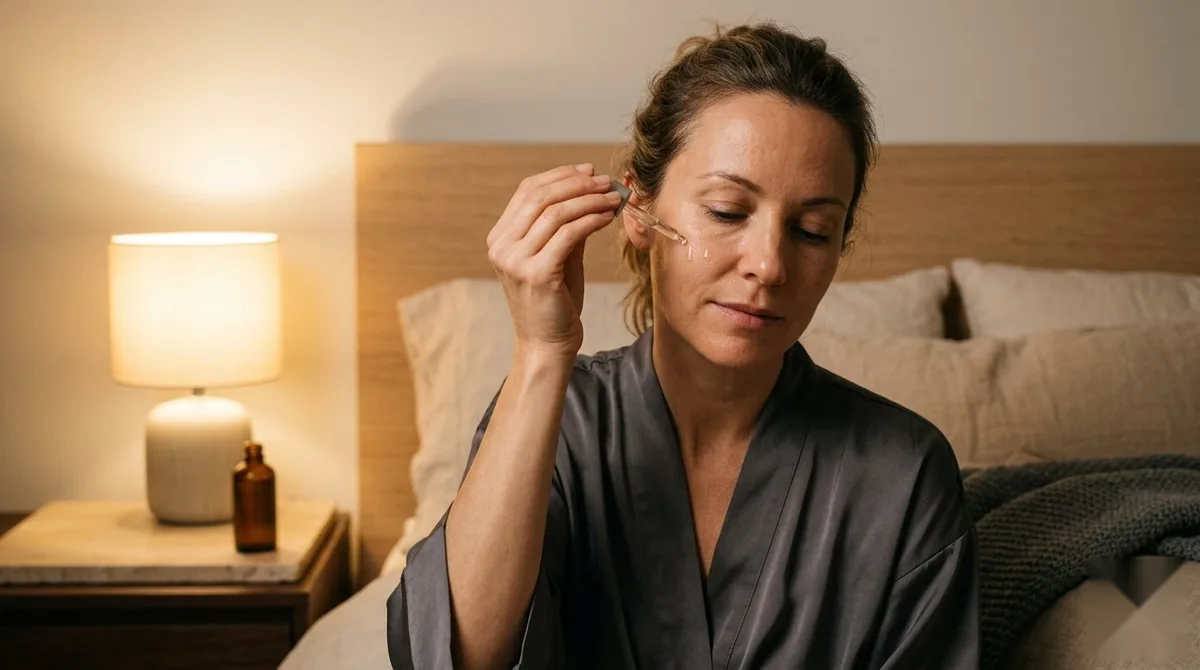
Few ingredients carry the reputation that retinol does. Dermatologists call it the closest thing skincare has to a sure thing for visible aging, and the clinical record backs that up. But it is also the ingredient most likely to leave a first-time buyer red, flaking, and convinced they bought a dud. The gap between those two experiences is almost never the formula — it is how the product was used.
This guide leads with the part most "best retinol" lists skip: what retinol is, what it can and cannot do, and how to introduce it so you actually get to the results. Then we rank eight luxury formulas by what Amazon buyers report.
What Retinol Actually Does
Retinol is a form of vitamin A. Once absorbed, your skin converts it into retinoic acid, the active form that binds to receptors in skin cells and changes how they behave. Two effects matter most.
First, it accelerates cell turnover, pushing newer cells to the surface faster — which is what gradually smooths texture and fades the look of dark spots. Second, over months of use it signals fibroblasts to produce more collagen, the structural protein that thins with age. That collagen effect is the one responsible for the softening of fine lines that retinol is famous for, and it is also the slowest to appear.
What retinol is not: it is not an exfoliating acid, it is not a hydrator, and it is not instant. The flaking many people experience early on is sometimes mistaken for "exfoliation working," but it is actually the skin barrier reacting to an unfamiliar active. That distinction matters because the fix is patience and moisture, not more product.
Retinol vs. Retinal vs. Retinyl: The Strength Ladder
The vitamin A family is a spectrum, and the label terms describe how many conversion steps your skin has to perform before the ingredient becomes active retinoic acid. Fewer steps, more potency.
Retinyl esters (retinyl palmitate, retinyl retinoate) sit at the gentle end. They are the slowest to convert, making them a sensible entry point for reactive or very dry skin.
Retinol is the middle of the ladder and the most common form in OTC products; it is the reference point most clinical studies use. Retinal (retinaldehyde) is one step closer to retinoic acid, so it tends to work faster — several luxury brands have built their reputation on stabilized retinal for exactly this reason. Prescription tretinoin is retinoic acid itself and sits beyond the scope of an OTC ranking.
The practical takeaway from buyer reviews is consistent: the "strongest" option is rarely the best choice. The product you tolerate well enough to use three or four nights a week, for months, will outperform a higher concentration that sends you running after a week of peeling.
How to Start Retinol Without Wrecking Your Skin
Most negative reviews start here.
Go slow on frequency
Begin with two nights a week for the first two to three weeks. If your skin stays calm, move to every other night, and only then consider nightly use. The skin's adjustment period — often called retinization — typically lasts two to four weeks, and pushing through it with daily application is the single most common reason people give up.
Use less than you think
A pea-sized amount covers the entire face. More product does not mean faster results; it means more irritation. Apply to dry skin (damp skin drives deeper penetration and more sting), and consider the "sandwich" method — moisturizer, then retinol, then moisturizer — if you are prone to dryness.
Night only, SPF always
Retinol degrades in sunlight and makes skin more sun-sensitive, so it belongs in your PM routine. Daily broad-spectrum sunscreen the next morning is non-negotiable; skipping it undoes the very collagen and tone benefits you are using retinol to gain.
Mind your combinations
Layering retinol with strong exfoliating acids (glycolic, salicylic) or vitamin C on the same night is a frequent irritation trigger. Many buyers settle into a simple split: vitamin C and SPF in the morning, retinol at night, exfoliating acids on the nights retinol is off.