Affiliate & AI Disclosure: This site earns commissions on purchases via affiliate links and uses AI-assisted research. We don't personally test products. Full disclosures ↓
This content is for informational purposes only and does not constitute medical or dermatological advice. Consult a qualified professional for personal skincare guidance. As an Amazon Associate, The Skin Score earns from qualifying purchases.
Treatments — Top 8 Ranking

Best Luxury Facial Sunscreens of 2026: The Anti-Aging Step You're Skipping

Daily sunscreen is the single most effective anti-aging product you can buy — and the one most people apply wrong. Here's the science, the mineral-vs-chemical question settled, and the luxury SPFs buyers say they actually enjoy wearing.

Luxury facial sunscreens arranged in a flatlay
📅 Published: June 8, 2026 🕐 Data pulled: June 8, 2026 Source: Amazon.com 13 min read

Key Takeaways

If you only adopt one product from any ranking we publish, make it this one. Sunscreen is the rare skincare step where the evidence is not just strong but overwhelming: protecting skin from ultraviolet light prevents more visible aging than any serum, cream, or treatment can reverse. The challenge has never been whether SPF works — it is whether a formula is pleasant enough that you will actually wear it every day and reapply it. That is exactly where the luxury tier has made real progress.

Below, we explain why daily SPF matters so much, settle the mineral-versus-chemical question, cover how much to apply and how often — then rank eight luxury facial sunscreens by what buyers consistently report about texture, finish, and wearability.

Why Daily Sunscreen Is the Best Anti-Aging Product

Dermatologists are near-unanimous on this point. A large share of the visible signs people associate with aging — fine lines, loss of firmness, uneven tone, dark spots — are driven not by time alone but by cumulative ultraviolet exposure, a process called photoaging. Studies of sun-protected versus sun-exposed skin make the case vividly, and research has shown that daily sunscreen use slows the development of these signs over time.

The practical implication reframes how to think about your routine: an expensive retinol or vitamin C works with sunscreen, not instead of it. Skipping SPF while using actives is like bailing water without plugging the leak. This is why we treat daily sunscreen as the foundation of any anti-aging routine rather than an optional add-on.

Broad Spectrum: The Word That Actually Matters

Ultraviolet light comes in two relevant types. UVB is the burning ray, strongest midday and in summer; it is what the SPF number measures. UVA penetrates deeper, passes through clouds and glass, is present year-round, and is the primary driver of photoaging. A high SPF number tells you nothing about UVA protection.

The term that guarantees both is broad spectrum. For daily use, a broad-spectrum product of at least SPF 30 is the standard recommendation. Buyers who chase the highest SPF number while ignoring "broad spectrum" are optimizing the wrong variable — and in reviews, the products people reach for daily are the ones that protect against UVA without feeling heavy.

Mineral vs. Chemical: Settling the Debate

This is the question that drives the most confusion, so here is the honest version: neither category is inherently better, and the right choice depends on your skin and your preferences.

Mineral (physical) sunscreens use zinc oxide and/or titanium dioxide, which sit on the skin and deflect UV. They are gentle, making them a strong choice for sensitive, reactive, or post-procedure skin, and they protect immediately on application. The historic downside — a white cast on deeper skin tones — has improved but still appears in reviews, particularly with all-mineral formulas. Tinted mineral versions largely solve it.

Chemical sunscreens use filters (such as avobenzone, octinoxate, octisalate) that absorb UV and convert it to heat. They tend to be lighter, more cosmetically elegant, and easier to wear invisibly under makeup — which is why the most "I forget I'm wearing it" reviews cluster here. They need about 15 minutes to become effective after application.

The single best predictor of whether a sunscreen protects you is not its category — it is whether you enjoy wearing it enough to apply enough, and to reapply. That is the lens our ranking uses.

How Much to Apply, and How Often

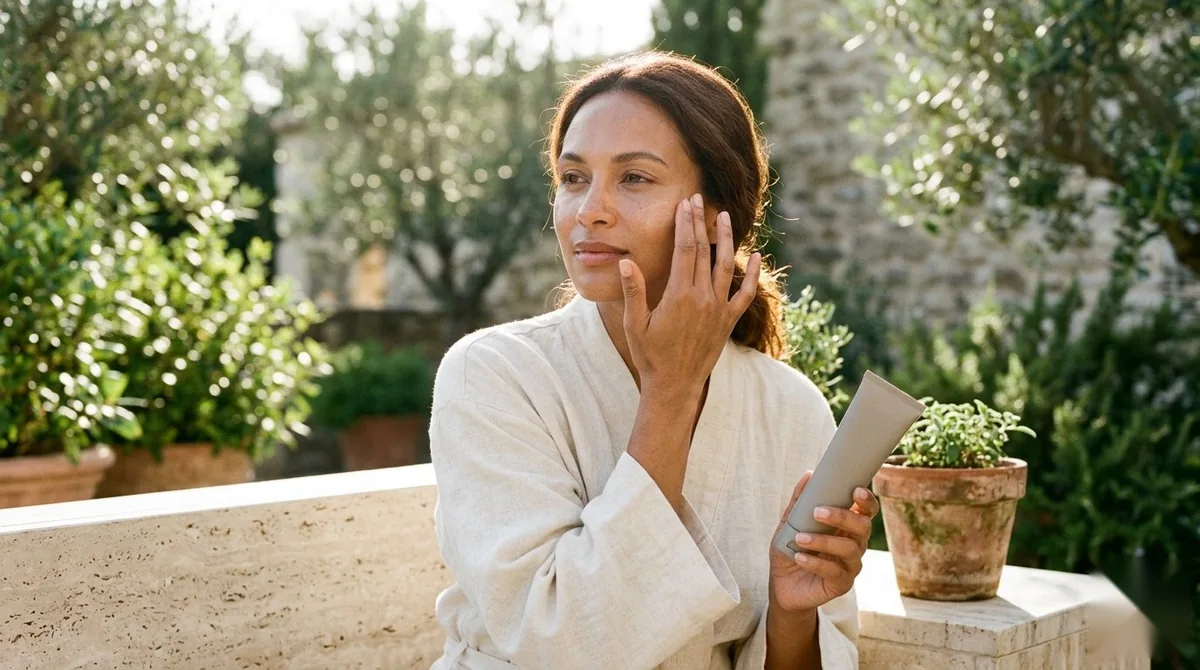
Under-application is the quiet failure point. The SPF on the label is measured at a generous dose most people never use, so applying a thin layer can cut your real-world protection dramatically. For the face, aim for roughly a quarter-teaspoon, or the "two-finger" length of product squeezed along your index and middle fingers.

Reapplication matters just as much. Sunscreen breaks down with sun exposure and rubs off through the day, so reapply every two hours during sustained sun exposure, and after sweating or swimming. The honest obstacle is makeup — which is why SPF powders and sticks, designed to layer over a finished face, have become the format buyers credit most for making reapplication something they'll actually do.

How these picks were chosen: Rankings reflect aggregated sentiment from Amazon buyer reviews — not personal product testing. We use AI-assisted analysis to surface what buyers consistently praise and criticize across hundreds to thousands of reviews per product. Star ratings shown are our reading of buyer sentiment across the review sample analyzed, and prices were pulled from Amazon on June 8, 2026. Amazon's live ratings and prices change continuously — always verify on Amazon before purchasing.

The Top Picks, Ranked by Buyers

1
Tatcha
The Silk Sunscreen SPF 50
★★★★☆ 4.6 from 1,350 Amazon reviews
Top Pick
$65
View on Amazon

The buyer favorite for makeup compatibility. The Silk Sunscreen is a broad-spectrum SPF 50 that doubles as a primer, and reviewers single it out for a silky, non-greasy finish that makeup grips to rather than slides off. Skincare-style ingredients (silk extract, hyaluronic acid) make it feel like a treatment step. The main criticisms are the price for the size and a soft sheen some oily-skin buyers wish were more matte.

Primer-like, makeup-gripping finishBroad-spectrum SPF 50 with skincare activesNo white cast in reviewsPremium price for the volumeSlight sheen not ideal for very oily skin
2
Supergoop!
Unseen Sunscreen SPF 40
★★★★☆ 4.5 from 4,100 Amazon reviews

The most-reviewed and most-recommended invisible option. Unseen is a clear, weightless gel that dries to a velvety, primer-like finish with genuinely no white cast on any skin tone — the trait reviewers mention most. The huge review base makes its broad, positive sentiment especially credible. The two recurring caveats: the fragrance-free formula still has a faint scent some detect, and very dry skin may want a moisturizer underneath.

Truly invisible on all skin tonesVelvety, primer-like base for makeupLargest, most consistent review base hereBest with moisturizer for dry skinFaint scent some notice
3
SkinCeuticals
Physical Fusion UV Defense SPF 50
★★★★★ 4.7 from 2,250 Amazon reviews

The buyer-rated standout for sensitive skin that still wants a glow. This 100% mineral SPF 50 carries a universal sheer tint that counteracts the usual mineral white cast, and reviewers with reactive or rosacea-prone skin rate it highly for comfort. The tint gives a soft, lit-from-within finish many love. Criticisms are minor: the tint is light and won't suit the deepest skin tones perfectly, and the bottle is small.

100% mineral, sensitive-skin friendlyUniversal tint offsets white castSoft, radiant finishTint too light for the deepest tonesSmall bottle
4
Shiseido
Ultimate Sun Protector Lotion SPF 50+
★★★★★ 4.7 from 3,000 Amazon reviews

The performance pick for active days. Shiseido's signature technology is built to become more effective on contact with water or sweat, which is why reviewers who hike, swim, or live in humid climates rate it so highly. The finish is light for such high protection. The trade-offs in reviews: a faint scent, and a formula geared more to robust protection than to a primer-like makeup base, so some prefer a lighter daily option for desk days.

Protection strengthens with sweat and waterHigh SPF 50+ with a light feelIdeal for outdoor and humid conditionsFaint fragranceLess primer-like under makeup
5
Clarins
UV Plus Anti-Pollution SPF 50
★★★★☆ 4.6 from 1,100 Amazon reviews

The elegant daily fluid with French-pharmacy polish. UV Plus is a lightweight SPF 50 that layers invisibly and adds antioxidant and anti-pollution claims buyers in urban environments appreciate. Reviewers describe it as a fuss-free everyday base. Available tinted and untinted versions add flexibility. The recurring note is price-to-size, and a few buyers wish it were more hydrating on its own — easily solved with moisturizer underneath.

Lightweight, invisible daily fluidAntioxidant / anti-pollution claimsTinted and untinted optionsPricey for the sizeLight on standalone hydration
6
Allies of Skin
The One SPF 50
★★★★☆ 4.4 from 520 Amazon reviews

The treatment-grade hybrid for ingredient enthusiasts. The One layers SPF 50 with a long list of antioxidants and skincare actives, marketed as a sunscreen-and-serum in one. Reviewers who want fewer steps love the all-in-one approach and the weightless, invisible finish. The smaller review base and the highest-per-step price here place it mid-pack on value, and a few buyers note it performs best as the final treatment step rather than alongside a separate serum.

SPF plus antioxidants and actives in oneWeightless, invisible finishStreamlines a routineSmaller review basePremium price per step
7
La Mer
The UV Protecting Fluid SPF 50
★★★★☆ 4.5 from 480 Amazon reviews

The ultra-luxury option, and the most polarizing on value. La Mer's SPF 50 fluid carries the brand's signature Miracle Broth and a silky, hydrating finish devotees describe as the most pleasant sunscreen they've used. Sentiment on the experience is genuinely positive; the debate is entirely about price, the highest in this ranking by a wide margin. For buyers already invested in the La Mer ritual it earns its place; for value-focused shoppers, the picks above deliver comparable protection for far less.

Hydrating, luxurious finishSignature La Mer formulaPleasant daily-wear experienceBy far the highest price hereValue heavily debated in reviews
8
Dr. Barbara Sturm
Sun Drops SPF 50
★★★★☆ 4.3 from 360 Amazon reviews

The serum-style SPF for buyers who hate the sunscreen feel. Sun Drops is a lightweight, drop-format SPF 50 that can be used alone or mixed into moisturizer, and fans love how skincare-like it feels. The review base is the smallest here, and two themes recur: the price is steep, and because the texture is so light, buyers must be especially careful to apply a full dose to actually reach the labeled protection. A genuine niche favorite that lands last here on value and volume.

Serum-light, skincare-like feelCan be mixed into moisturizerNo heavy sunscreen finishHighest price-to-size hereLight texture risks under-application

Not sure what’s right for you?

Take our 60-second quiz for a personalized luxury skincare recommendation.

Take the Quiz →

Browse all luxury facial sunscreens on Amazon →


Side by Side

Quick Comparison

Prices and ratings pulled from Amazon on June 8, 2026. Verify on Amazon before purchasing — figures change continuously.

Product Filter Type SPF Price Tinted Buyer Sentiment
Tatcha The Silk SPF 50 Chemical50$65 No★★★★☆ 4.6
Supergoop! Unseen SPF 40 Chemical40$40 No★★★★☆ 4.5
SkinCeuticals Physical Fusion SPF 50 Mineral50$40 Universal tint★★★★★ 4.7
Shiseido Ultimate Sun Protector Chemical50+$50 No★★★★★ 4.7
Clarins UV Plus SPF 50 Chemical50$48 Optional★★★★☆ 4.6
Allies of Skin The One SPF 50 Chemical50$62 No★★★★☆ 4.4
La Mer UV Protecting Fluid Chemical50$125 No★★★★☆ 4.5
Dr. Barbara Sturm Sun Drops SPF 50 Chemical50$145 No★★★★☆ 4.3

Which One Should You Choose?

Choose Tatcha The Silk or Supergoop Unseen if:

You wear makeup daily and want an invisible, primer-like base. These are the two reviewers most often call 'the one I forget I'm wearing.'

Choose SkinCeuticals Physical Fusion if:

You have sensitive, reactive, or rosacea-prone skin and want a mineral formula with a flattering tint instead of a white cast.

Choose Shiseido Ultimate Sun Protector if:

You spend time outdoors, sweat, or swim — its water-activated technology is the standout for active, humid conditions.

Choose Clarins UV Plus or Allies of Skin The One if:

You want an elegant daily fluid with added antioxidant or anti-pollution benefits and prefer fewer steps.

Choose La Mer or Dr. Barbara Sturm if:

You're invested in a luxury ritual and value the experience and feel over price-per-ml. Both are loved by their fans and questioned on value by everyone else.


Common Questions

Frequently Asked Questions

Is mineral or chemical sunscreen better?

Neither is universally better. Mineral (zinc/titanium) sunscreens are gentle and ideal for sensitive, reactive, or post-procedure skin and protect immediately. Chemical sunscreens are lighter, more cosmetically elegant, and easier to wear invisibly under makeup.

The best sunscreen is the one you enjoy wearing enough to apply generously and reapply — that matters far more than the category.

What SPF do I need for daily use?

A broad-spectrum sunscreen of at least SPF 30 is the standard daily recommendation. 'Broad spectrum' is the key term — it means the product protects against both UVB (burning) and UVA (aging) rays. The SPF number alone only describes UVB protection.

How much sunscreen should I apply to my face?

About a quarter-teaspoon, or the 'two-finger' length squeezed along your index and middle fingers. Most people apply far too little, which significantly reduces the real-world protection below the number on the label.

Do I need to reapply sunscreen if I'm indoors all day?

If you're away from windows, a single morning application is generally adequate. But UVA passes through glass, so near a sunny window or outdoors you should reapply every two hours of exposure. SPF powders and sticks make reapplying over makeup realistic.

Can I rely on the SPF in my makeup or moisturizer?

Usually not on its own. The SPF in foundations and moisturizers is rarely applied in the amount needed to reach the labeled protection. A dedicated sunscreen as a distinct step is more reliable; SPF makeup is best treated as a bonus, not a substitute.

Does sunscreen really prevent aging?

The evidence is strong. A large proportion of visible facial aging is attributed to cumulative UV exposure, and studies have found that regular daily sunscreen use slows the development of those signs over time. It's widely considered the most effective anti-aging step available.


Related Reading

📅
Data transparency: Star ratings, the number of reviews analyzed, and prices on this page reflect our sentiment analysis of Amazon buyer reviews and were compiled on June 8, 2026. Amazon's own listing ratings update continuously as new reviews are added. If figures shown here differ from what you see on Amazon today, Amazon's current figures are correct and supersede ours. Always verify before purchasing.
← Back to Home All Articles →
Stay Informed

New rankings every week.

Consumer sentiment reports, ranking updates, and deals — no hype.